
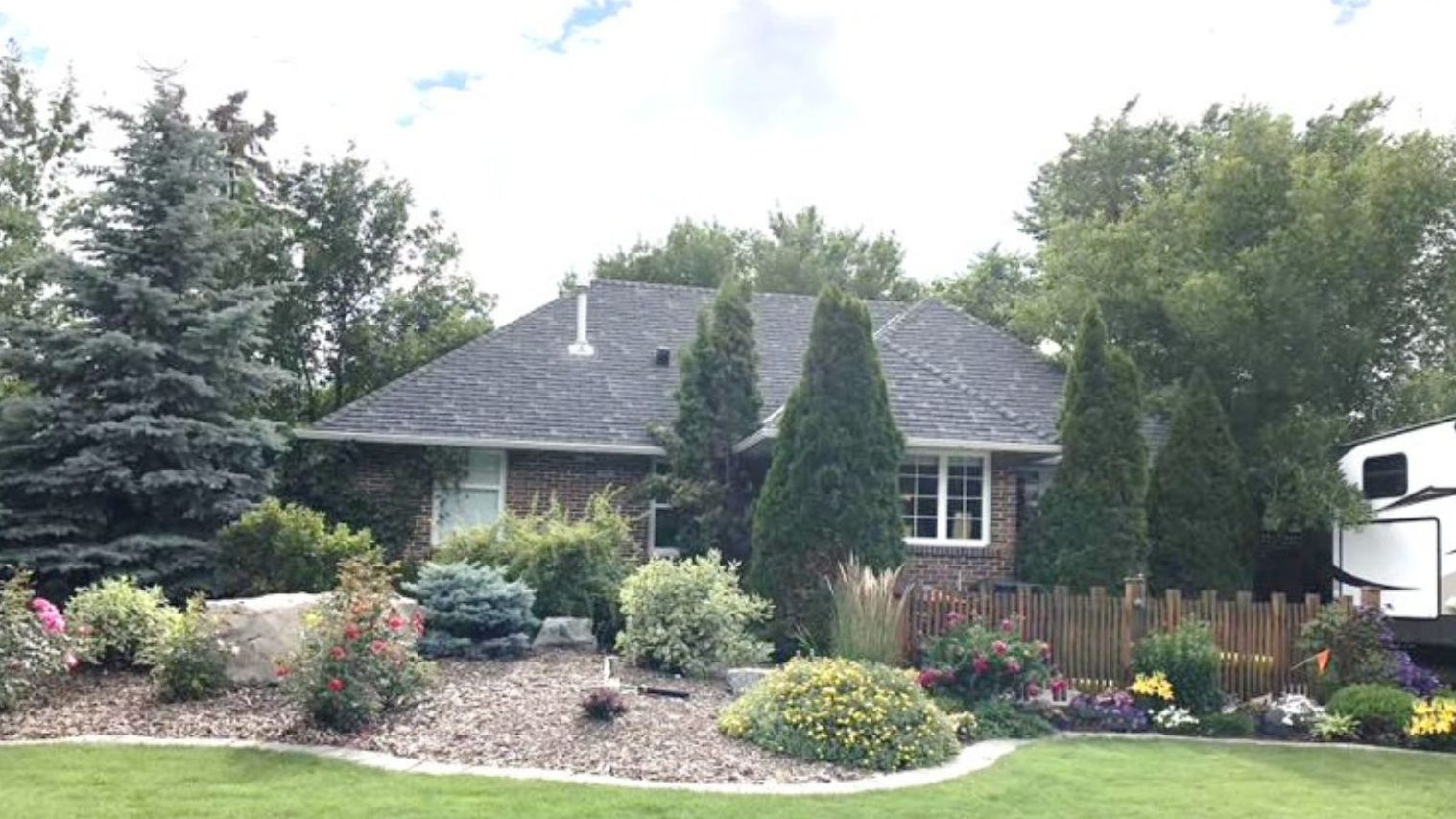
As an arborist, I love trees. As a gardener, I also love flowers and fresh food. In nature, these elements do not always thrive together, yet in urban landscapes we often try to fit them all into one small lot. That is why planting near trees can be challenging.
Planting under or near trees works best when you match plants by light, irrigation needs and sufficient space to grow. Do I have colourin all seasons? A healthy landscape depends on choosing plants that can coexist rather than compete. Will it stay attractive through the season? It should all come together like a good symphony – each component combines to make a beautiful space. These choices lead to healthier, longer-lasting landscapes.
Watering considerations
Trees usually need deep, infrequent watering, while flowers and turf often need shallower, more frequent moisture. Irrigation should be planned with both in mind.
Drip lines should not stay tight to the base of a plant as it grows. Move emitters outward to the drip line, where feeder roots are most active.
Mulch and ground cover choices
Bark mulch is often a better choice than landscape fabric or gravel. Fabric does not stop weed seeds and can interfere with soil life, while gravel can compact soil and hold heat.
Organic mulches help moderate soil temperature, while rock mulch absorbs and releases heat.
- Daytime: Rocks heat the upper soil, increasing evaporation and drying.
- Nighttime: Rocks release stored heat, reducing overnight cooling.
- Extreme heat: In full sun, rock mulch can stress shallow-rooted plants and increase water demand.
Successful planting near trees depends on choosing size appropriate and compatible plants, planning irrigation carefully, and using materials that support healthy soil.
How Can We Help Your Trees Today? Follow us on Facebook.
Maureen Sexsmith-West, ISA Certified Arborist, PR4600A