

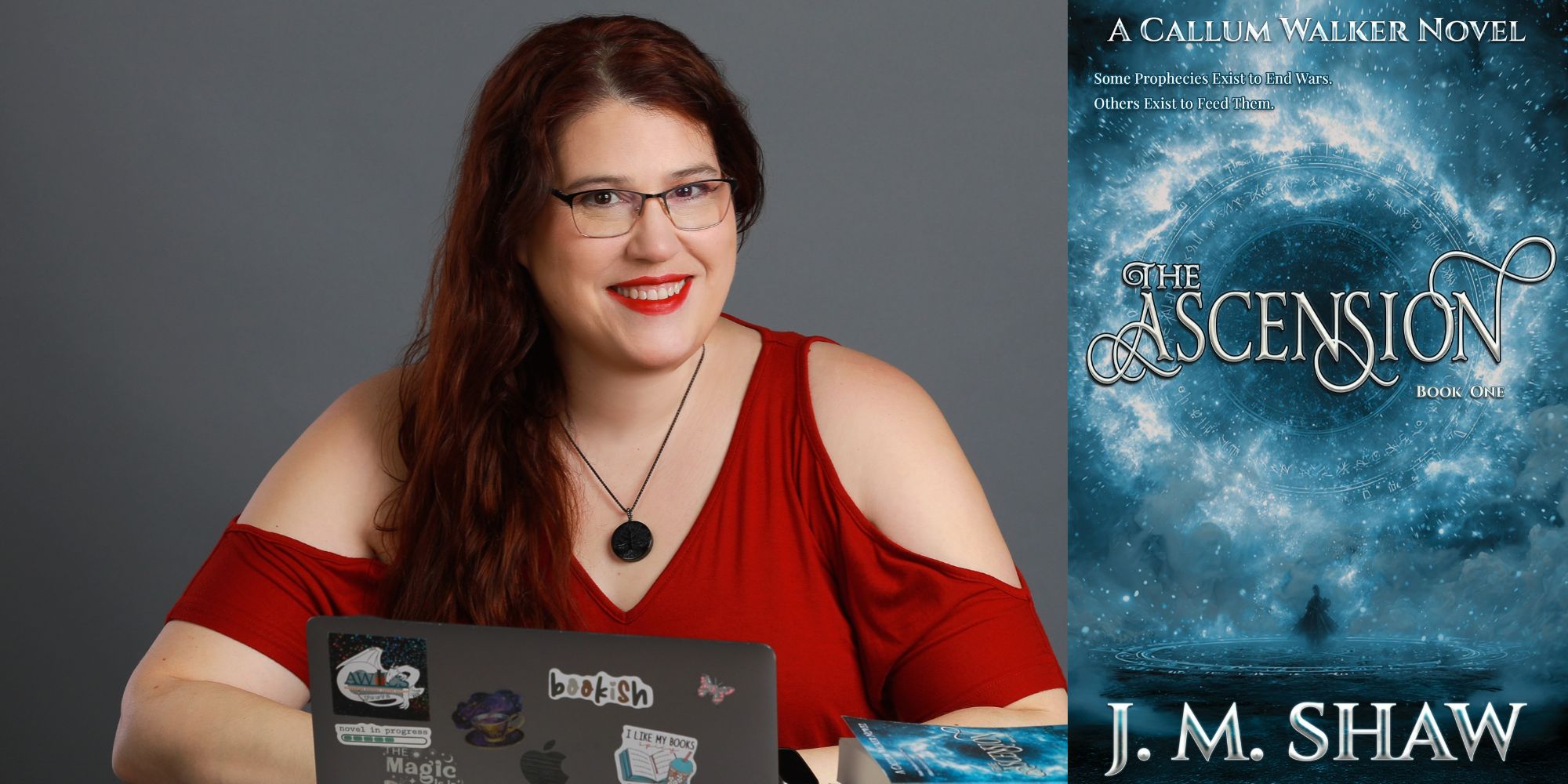
I’ve been writing for as long as I can remember, though for many years I lacked the confidence to share my stories. What began as a creative outlet gradually became a passion. For me, writing is not just a hobby. It is a sanctuary, a means of navigating life’s complexities, and a space where my imagination can thrive.
As a deeply introverted youth, I spent many years studying everyone I encountered, trying to understand the social structures around me … and where I fit in. I struggled to read unspoken cues, was often awkward in conversation, easily overwhelmed, and had trouble regulating my emotions. I analyzed behaviours and conversations, making notes and mentally rehearsing how I might respond in similar situations.
I also became an avid reader, diving into the minds of fictional characters — since I couldn’t look into the minds of the living — to understand the logic behind human behaviour. Because I thrived on logic, and since life is rarely so clean-cut, I asked questions and let my mind fill in the blanks to make sense of the irrational. Eventually, observing wasn’t enough, so I began writing my own stories.
I began with poems, then fragmented scenes, followed by short stories, and eventually full-length novels, drawing on my observations for inspiration. I lived vicariously through my characters, placing them in situations that elicited those sentiments I wished to explore — often mirroring my own. In this way, I discovered how to identify my feelings and resolve my inner unrest in a world where I shaped the rules. Thus, writing became a form of therapy.
As my journey continued, I dreamed of becoming a published author, but it was just that … a dream. At the time, I was reluctant to let anyone read my work, convinced it wasn’t good enough. I couldn’t help but compare myself to authors whom I admired — Stephen King, Margaret Atwood, Michael Crichton, Dan Brown and countless others — who I saw as masters of their craft. I found their plots engaging, and their prose powerful, unlike my early, unrefined narratives.
Through persistence, trial and error, and a hefty dose of humility, I honed my craft. I wrote thousands of pages, refining my strengths and correcting my flaws until I had something I could be proud of — only to step away, return with fresh eyes, and rewrite it. No matter how hard I worked, I could not escape that perpetual doubt that haunts both new and established authors.
Everything changed in 2019 when I was diagnosed with autism and ADHD. Though shocking, it was a revelation. My intense focus, attention to detail, overactive imagination, and ability to live within my stories weren’t flaws; they were gifts of a neurodivergent brain. My difficulty identifying and conforming to social expectations led me to become an author. Far from being a disability, my diagnosis was the key that unlocked the truth about who I was — a woman capable of emotional depth and profound creativity. Rather than feeling broken, everything finally made sense, and I was at peace with that.
At that point, after years of practice and research, I had apprenticed myself in the art of writing and storytelling — two things we all know are not the same. It was my diagnosis that gave me the courage to send a sample manuscript to an editor, reassuring myself that the worst they could say was that it required further work. Instead, they encouraged me to publish.
That was my turning point. Two years later, I followed my editor’s advice and released my first novel.

